🚚 Free Worldwide Shipping on All Orders!Shop Now

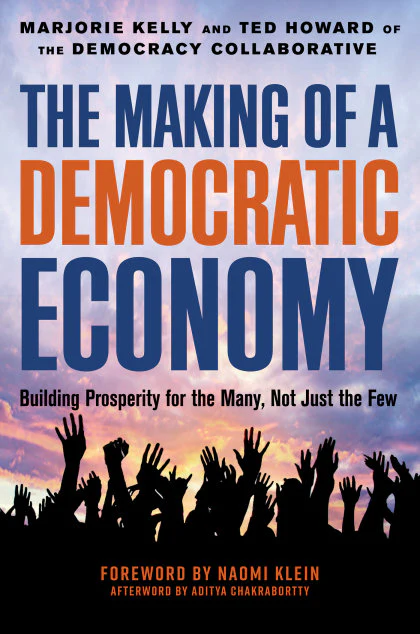
The Making of a Democratic Economy
Seven principles for a just and sustainable system, accompanied by true stories of "the people creating the institutions of the next economy" (Kat Taylor, cofounder, Beneficial State Bank).
The extractive economy we live with now—designed by the 1 percent for the 1 percent—enables the financial elite to squeeze out maximum gain for themselves, heedless of damage to people or planet. But in this compelling book, Marjorie Kelly and Ted Howard show that there is a new economy emerging, focused on helping everyone thrive while respecting planetary boundaries.
At a time when competing political visions are at stake the world over, this book urges a move beyond tinkering at the margins to address the systemic crisis of our economy. Kelly and Howard outline seven principles of what they call a Democratic Economy: community, inclusion, place (keeping wealth local), good work (putting labor before capital), democratized ownership, ethical finance, and sustainability. Each principle is paired with a place putting it into practice: Pine Ridge, Preston, Portland, Cleveland, and more.
Included are stories not just of activists and grassroots leaders but of the unexpected accomplices of the Democratic Economy. Seeds of a future beyond corporate capitalism and state socialism are being planted in hospital procurement departments, pension fund offices, and even company boardrooms. The future remains uncertain—but Kelly and Howard help us understand how to nurture and grow those seeds into an equitable, ecologically sustainable economy that benefits all of us, not just the billionaires.
“As champions of worker and community ownership, Kelly and Howard remind us that economic democracy is essential to political democracy and a viable human future.” —David Korten, author of When Corporations Rule the World
The extractive economy we live with now—designed by the 1 percent for the 1 percent—enables the financial elite to squeeze out maximum gain for themselves, heedless of damage to people or planet. But in this compelling book, Marjorie Kelly and Ted Howard show that there is a new economy emerging, focused on helping everyone thrive while respecting planetary boundaries.
At a time when competing political visions are at stake the world over, this book urges a move beyond tinkering at the margins to address the systemic crisis of our economy. Kelly and Howard outline seven principles of what they call a Democratic Economy: community, inclusion, place (keeping wealth local), good work (putting labor before capital), democratized ownership, ethical finance, and sustainability. Each principle is paired with a place putting it into practice: Pine Ridge, Preston, Portland, Cleveland, and more.
Included are stories not just of activists and grassroots leaders but of the unexpected accomplices of the Democratic Economy. Seeds of a future beyond corporate capitalism and state socialism are being planted in hospital procurement departments, pension fund offices, and even company boardrooms. The future remains uncertain—but Kelly and Howard help us understand how to nurture and grow those seeds into an equitable, ecologically sustainable economy that benefits all of us, not just the billionaires.
“As champions of worker and community ownership, Kelly and Howard remind us that economic democracy is essential to political democracy and a viable human future.” —David Korten, author of When Corporations Rule the World
Seven principles for a just and sustainable system, accompanied by true stories of "the people creating the institutions of the next economy" (Kat Taylor, cofounder, Beneficial State Bank).
The extractive economy we live with now—designed by the 1 percent for the 1 percent—enables the financial elite to squeeze out maximum gain for themselves, heedless of damage to people or planet. But in this compelling book, Marjorie Kelly and Ted Howard show that there is a new economy emerging, focused on helping everyone thrive while respecting planetary boundaries.
At a time when competing political visions are at stake the world over, this book urges a move beyond tinkering at the margins to address the systemic crisis of our economy. Kelly and Howard outline seven principles of what they call a Democratic Economy: community, inclusion, place (keeping wealth local), good work (putting labor before capital), democratized ownership, ethical finance, and sustainability. Each principle is paired with a place putting it into practice: Pine Ridge, Preston, Portland, Cleveland, and more.
Included are stories not just of activists and grassroots leaders but of the unexpected accomplices of the Democratic Economy. Seeds of a future beyond corporate capitalism and state socialism are being planted in hospital procurement departments, pension fund offices, and even company boardrooms. The future remains uncertain—but Kelly and Howard help us understand how to nurture and grow those seeds into an equitable, ecologically sustainable economy that benefits all of us, not just the billionaires.
“As champions of worker and community ownership, Kelly and Howard remind us that economic democracy is essential to political democracy and a viable human future.” —David Korten, author of When Corporations Rule the World
The extractive economy we live with now—designed by the 1 percent for the 1 percent—enables the financial elite to squeeze out maximum gain for themselves, heedless of damage to people or planet. But in this compelling book, Marjorie Kelly and Ted Howard show that there is a new economy emerging, focused on helping everyone thrive while respecting planetary boundaries.
At a time when competing political visions are at stake the world over, this book urges a move beyond tinkering at the margins to address the systemic crisis of our economy. Kelly and Howard outline seven principles of what they call a Democratic Economy: community, inclusion, place (keeping wealth local), good work (putting labor before capital), democratized ownership, ethical finance, and sustainability. Each principle is paired with a place putting it into practice: Pine Ridge, Preston, Portland, Cleveland, and more.
Included are stories not just of activists and grassroots leaders but of the unexpected accomplices of the Democratic Economy. Seeds of a future beyond corporate capitalism and state socialism are being planted in hospital procurement departments, pension fund offices, and even company boardrooms. The future remains uncertain—but Kelly and Howard help us understand how to nurture and grow those seeds into an equitable, ecologically sustainable economy that benefits all of us, not just the billionaires.
“As champions of worker and community ownership, Kelly and Howard remind us that economic democracy is essential to political democracy and a viable human future.” —David Korten, author of When Corporations Rule the World
$30.85
The Making of a Democratic Economy—
$30.85
Description
Seven principles for a just and sustainable system, accompanied by true stories of "the people creating the institutions of the next economy" (Kat Taylor, cofounder, Beneficial State Bank).
The extractive economy we live with now—designed by the 1 percent for the 1 percent—enables the financial elite to squeeze out maximum gain for themselves, heedless of damage to people or planet. But in this compelling book, Marjorie Kelly and Ted Howard show that there is a new economy emerging, focused on helping everyone thrive while respecting planetary boundaries.
At a time when competing political visions are at stake the world over, this book urges a move beyond tinkering at the margins to address the systemic crisis of our economy. Kelly and Howard outline seven principles of what they call a Democratic Economy: community, inclusion, place (keeping wealth local), good work (putting labor before capital), democratized ownership, ethical finance, and sustainability. Each principle is paired with a place putting it into practice: Pine Ridge, Preston, Portland, Cleveland, and more.
Included are stories not just of activists and grassroots leaders but of the unexpected accomplices of the Democratic Economy. Seeds of a future beyond corporate capitalism and state socialism are being planted in hospital procurement departments, pension fund offices, and even company boardrooms. The future remains uncertain—but Kelly and Howard help us understand how to nurture and grow those seeds into an equitable, ecologically sustainable economy that benefits all of us, not just the billionaires.
“As champions of worker and community ownership, Kelly and Howard remind us that economic democracy is essential to political democracy and a viable human future.” —David Korten, author of When Corporations Rule the World
The extractive economy we live with now—designed by the 1 percent for the 1 percent—enables the financial elite to squeeze out maximum gain for themselves, heedless of damage to people or planet. But in this compelling book, Marjorie Kelly and Ted Howard show that there is a new economy emerging, focused on helping everyone thrive while respecting planetary boundaries.
At a time when competing political visions are at stake the world over, this book urges a move beyond tinkering at the margins to address the systemic crisis of our economy. Kelly and Howard outline seven principles of what they call a Democratic Economy: community, inclusion, place (keeping wealth local), good work (putting labor before capital), democratized ownership, ethical finance, and sustainability. Each principle is paired with a place putting it into practice: Pine Ridge, Preston, Portland, Cleveland, and more.
Included are stories not just of activists and grassroots leaders but of the unexpected accomplices of the Democratic Economy. Seeds of a future beyond corporate capitalism and state socialism are being planted in hospital procurement departments, pension fund offices, and even company boardrooms. The future remains uncertain—but Kelly and Howard help us understand how to nurture and grow those seeds into an equitable, ecologically sustainable economy that benefits all of us, not just the billionaires.
“As champions of worker and community ownership, Kelly and Howard remind us that economic democracy is essential to political democracy and a viable human future.” —David Korten, author of When Corporations Rule the World


